Nature’s Indifference to Human Suffering
To the LighthouseNature’s Indifference to Human Suffering names a central tension in the novel’s treatment of landscape: the natural world can offer beauty and momentary composure, yet it does not arrange itself around human grief or confirm that goodness will prevail. A hare, a wave, and a rocking boat may appear as distinct gifts, but the weather soon obscures them; the sea that invites solitary reflection provides no answer; and the death of Andrew Ramsay is set against the continuing rhythms of seasons and shoreline. Nature’s indifference is not merely a symbol of sorrow. It has narrative force of its own, interrupting human interpretation and exposing the wish to find a moral order in scenery as a fragile projection.
Beauty and Its Unstable Promise
At moments, the landscape seems to offer a whole that human beings might deserve and preserve. The narration imagines divine goodness parting a curtain to display a hare standing erect, a wave falling, and a boat rocking: separate forms made briefly clear, as though they could belong to people always. That promise is immediately withdrawn. The curtain closes; hail drenches and confuses the scene, leaving it difficult to imagine that calm can return or that scattered fragments can be composed into a perfect whole. The passage grants beauty its full force, but makes its duration uncertain: human effort earns only a glimpse and a respite, not lasting possession.
The image of the curtain turns perception itself into a precarious event. The natural scene can seem to reveal order, but the revelation is temporary, and the same world that supplies the glimpse can obscure it. This instability complicates any easy claim that beauty reflects an inward moral truth. The landscape may hold a person’s attention, but it does not promise that the person’s hopes will be fulfilled, or that a moment of harmony can withstand what follows.
Solitude, Weather, and the Limits of Consolation
The sea becomes a test of the hope that solitude in nature might answer private doubt. A sleeper drawn from bed to walk alone on the sand may seek a companion to solitude or some image capable of putting the night in order. Instead, no promptly available vision does that work: the hand dwindles, the voice resounds, and questions about what, why, and wherefore seem futile amid the confusion. The beach offers neither an interpreter nor a dependable mirror of the soul. The desire for a response comes from the human seeker; the surrounding world does not supply one on demand.
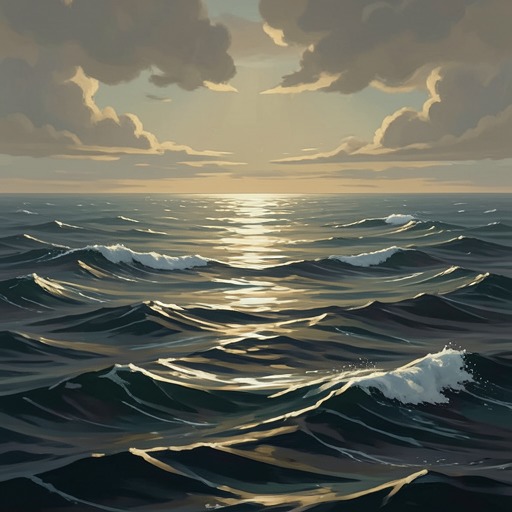
Weather intensifies this refusal. The nights fill with wind and destruction: trees bend, leaves scatter across the lawn and choke the rain pipes, and the sea tosses and breaks. Later, the storms and waves are figured as immense, unrational forces tumbling through night and day, while the seasons and years themselves run shapelessly together. The scale and duration of these processes do not correspond to the scale of any one person’s distress. Nature continues through tumult and calm alike, making the search for a stable message in the landscape increasingly untenable.
That independence is not equivalent to a simple claim that nature is always violent. In spring, flowers appear in the garden urns, and the brightness of the day returns; yet the stillness can seem as strange and terrible as the night’s chaos. The trees and flowers stand as though they behold nothing. Calm, no less than storm, offers no assurance that the world has noticed or answered human experience. The contrast prevents the natural scene from serving as a conventional emotional background that reliably echoes the characters’ feelings.
Loss Within the Natural and Historical World
The novel makes the distance between human grief and the world’s continuance most immediate through Mrs Ramsay’s death. After she has died suddenly, Mr Ramsay stumbles along a passage and stretches out his arms; they remain empty. The scene concentrates loss in a human gesture, but the surrounding night and the larger natural order do not reverse themselves in response. The emotional fact is absolute for those who loved her, while the world that contains it proceeds without offering repair.
The change of seasons similarly frames Prue Ramsay’s death. Her marriage is presented amid spring’s brightness, and she is described as beautiful; that summer, she dies from an illness connected with childbirth. The promise people attach to her wedding and appearance cannot protect her from loss. Against the human wish to read favorable signs in spring, the sequence places a death that the natural calendar neither prevents nor explains. The contrast does not make the season responsible for her fate; it shows how little the season’s apparent promise can guarantee.
War further breaks the habit of reading beauty as evidence of benign order. A shell explodes in France, killing Andrew Ramsay along with twenty or thirty young men; his death is instantaneous. The narration does not turn the landscape into an agent of this human violence. Instead, it places a particular war death within the passage of seasons and the indifferent continuance of the world, distinguishing the violence people inflict from the natural processes that do not respond to it.
The coastal scene makes the collision visible without allowing it to disappear into picturesque reflection. People walking by the sea encounter the usual signs of beauty, including sunset, dawn, moonlight, and fishing boats, but also a silent, ash-coloured ship and a purplish stain on the smooth sea. These marks disrupt the effort to continue admiring how outward beauty supposedly mirrors inward beauty. The damage is difficult to overlook or erase from the landscape; contemplation cannot simply restore the comfortable conclusion that beauty outside confirms beauty within. The sea remains beautiful, but beauty no longer suffices to conceal what has happened.
The House, the Lighthouse, and Nature’s Persistence
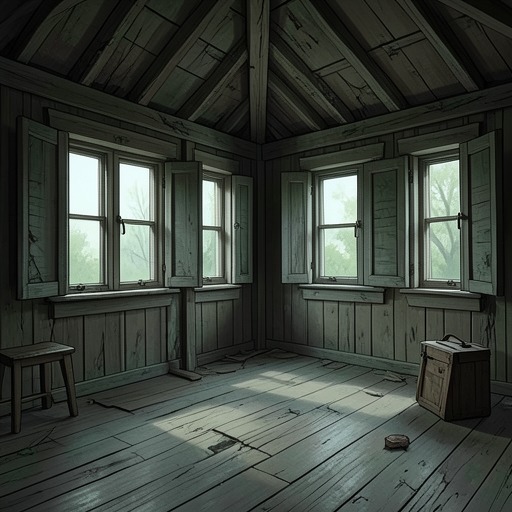
The deserted house extends the theme from sudden bereavement to prolonged abandonment. As its human occupants remain away, the building deteriorates amid weather and organic growth: the shawl sways, animals enter, and plants spread through rooms and garden. When Mrs McNab recalls Mrs Ramsay and the family, her memories register what the empty house has lost, but they cannot restore the people or halt decay. The house’s decline unfolds in a world where human absence is consequential to the people who remember it, not a command that nature must obey.
The Lighthouse beam continues to enter this changing space. It once lays a more authoritative pattern across a room; later, its stroke passes gently over the bed and lingers, while the loosened shawl moves in the empty house. In the later view, the beam’s momentary look falls on thistle, swallow, rat, and straw with the same composure. The recurring light connects human habitation to the nonhuman surroundings, yet it does not single out the absent family or turn their losses into a judgment. Its regular appearance offers a visual recurrence, not a promise of intervention.
The theme therefore refuses two consolations at once: that the natural world exists to reflect human feeling, and that human suffering must be answered by a larger benevolent order. Beauty can briefly gather scattered perceptions into a form; the sea and weather can overwhelm that form; and living processes can continue through a house emptied by loss. The novel’s landscape does not cancel human grief, but neither is it reduced to an illustration of grief. Its independent continuance is precisely what makes the characters’ hopes, attachments, and acts of remembrance both vulnerable and significant.